
Skip links
Selected Work | K Gyan Design Lab
SELECTED WORK

Systems built at
the edge of what's
mechanically possible.

A cross-section of engineering challenges we've solved across semiconductor capital equipment, robotics, aerospace, and advanced mechatronics. Client names withheld — the work speaks for itself.

FILTER BY
01
SEMICONDUCTOR

High-Acceleration Magnetically Levitated Stage

Contactless wafer transport stage using a vacuum-potted canned Halbach magnet array. Designed for high-acceleration profiles in lithography environments — achieving zero mechanical contact, minimal particle generation, and full vacuum compatibility. Crash architecture was patented for machine safety.

TYPE
Maglev Stage
ENVIRONMENT
High vacuum
KEY OUTCOME
Patented safety arch.
ENGINEERING CHALLENGEBridging the static and dynamic mechanical world while maintaining full vacuum integrity and achieving sub-millisecond crash response times.
FIG. 01 — MAGLEV
02
SEMICONDUCTOR

3 DoF Sub-Micron Positioning Module

Three degree-of-freedom positioning stage for optical measurement applications, achieving nanometer-level positioning resolution and repeatability. Thermally stable, vibration-decoupled, and fully SCRAMS-Q qualified for integration into production metrology tools.

RESOLUTION
Sub-micron
DOF
3 axis
APPLICATION
Optical metrology
ENGINEERING CHALLENGEAchieving nanometer-scale repeatability across thermal cycles without active compensation — solved through structural topology and material selection.
FIG. 02 — 3 DOF STAGE
03
SEMICONDUCTOR

Multi-Axis Optical Module Alignment Stage

High-precision multi-axis stage for optical module alignment in semiconductor inspection and lithography systems. Designed for repeatable, drift-free positioning of critical optical elements — minimizing alignment time and maximizing tool uptime.

TYPE
Alignment stage
AXES
Multi-axis
PRIORITY
Drift-free stability
ENGINEERING CHALLENGEEliminating thermal and mechanical drift over multi-hour operation windows while maintaining full adjustability for field alignment procedures.
FIG. 03 — ALIGNMENT
04
MECHATRONICS

Mechatronic Balance Mass — Vacuum to Atmosphere

A precision mechatronic balance mass system isolating vacuum from atmosphere while bridging the static and dynamic mechanical worlds in advanced lithography equipment. Enables high-acceleration stage motion without transmitting reaction forces into the vacuum structure.

INTERFACE
Vacuum / atm.
FUNCTION
Force decoupling
DOMAIN
Lithography
ENGINEERING CHALLENGEDecoupling dynamic reaction forces in real-time while maintaining vacuum integrity — a problem at the intersection of structural mechanics, dynamics, and sealing technology.
FIG. 04 — BALANCE MASS
05
ROBOTICS

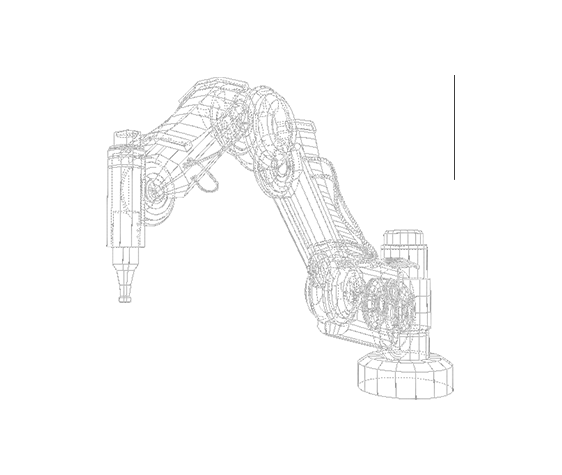
Automated Ship Hull Welding Robot Platform

Structural design of a mobile autonomous platform for ship hull welding operations. Engineered for continuous industrial operation in harsh marine environments — salt exposure, humidity, high thermal load — while maintaining precise weld-path positioning and payload capacity.

TYPE
Mobile robot
ENVIRONMENT
Marine / harsh
OPERATION
Continuous industrial
ENGINEERING CHALLENGEDesigning a structural system that remains dimensionally stable and corrosion-resistant through continuous welding thermal cycles in an uncontrolled marine environment.
FIG. 05 — WELD ROBOT
06
AEROSPACE

High-Strength Lightweight Lunar Rover Chassis

Chassis structural design for a lunar surface rover — engineered for extreme mass efficiency, thermal qualification across lunar day/night cycles, and mechanical survival through launch and landing loads. Material selection optimized for the radiation and vacuum environment of lunar deployment.

APPLICATION
Lunar surface
PRIORITY
Mass optimization
QUALIFICATION
Space-grade
ENGINEERING CHALLENGEAchieving structural survival through launch loads, lunar landing, and surface operations while minimizing mass — every gram carries a launch cost.
FIG. 06 — LUNAR ROVER
07
ROBOTICS

High-Performance Industrial Exoskeleton Framework

Structural engineering of a wearable industrial exoskeleton framework — designed for maximum force transfer efficiency, ergonomic fit across operator body types, and fatigue-resistant construction under continuous industrial shift loads. FMEA-driven safety architecture throughout.

TYPE
Wearable structure
KEY DESIGN
Force path optim.
SAFETY
FMEA-driven
ENGINEERING CHALLENGEDesigning a rigid load-bearing structure that conforms to human biomechanics — resolving the fundamental tension between structural stiffness and ergonomic compliance.
FIG. 07 — EXOSKELETON

What we bring to every program.

First-principles analysis
Hand calculations before simulation. We understand why, not just whether.
Tolerance stack analysis
Statistical and worst-case 1D/3D stack-up — nothing surprises at first article.
FEA & simulation
Structural, thermal, dynamic — simulation to support design decisions, not replace them.
DFM / DFA
Design for manufacturability and assembly — production-ready from the first draft.
FMEA
Design and process FMEA — failure modes identified and mitigated before they're built.
Prototyping & validation
Functional model testing and iterative refinement through proof-of-concept phases.
Engineering governance
Structured documentation, version control, and traceable decision records throughout.
Industrialization
Production ramp-up, tooling design, and manufacturing readiness reviews for scale.
Have a precision
engineering challenge?

Tell us what you're building. We'll tell you what we can do.

Start the conversation ↗ kushal@kgyandesignlab.com

Let's talk

Have a project in mind?